Yumo
All your city’s car care, in your pocket.
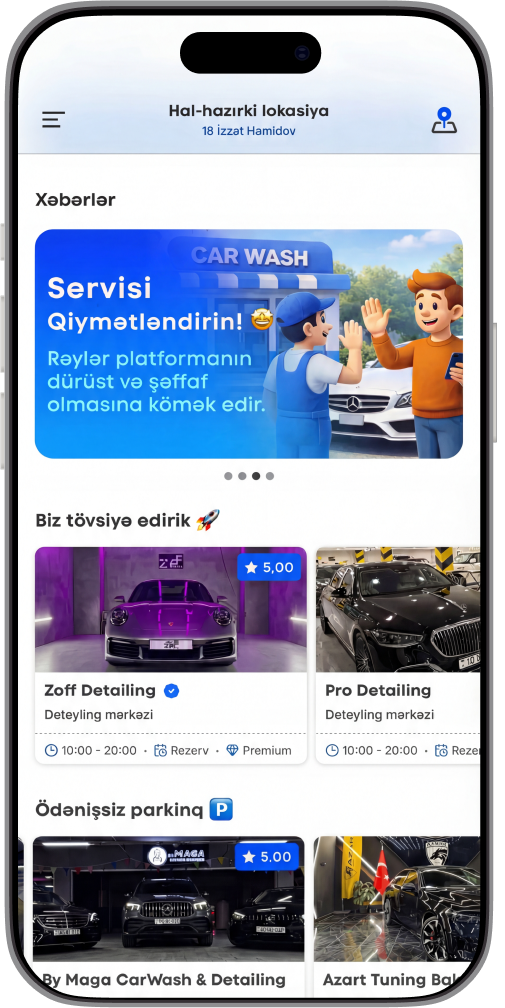
Yumo brings car-care services, partner information and booking into one journey. The design work spans what drivers see before making a choice and what partners need to handle the request.
Give drivers a way to compare
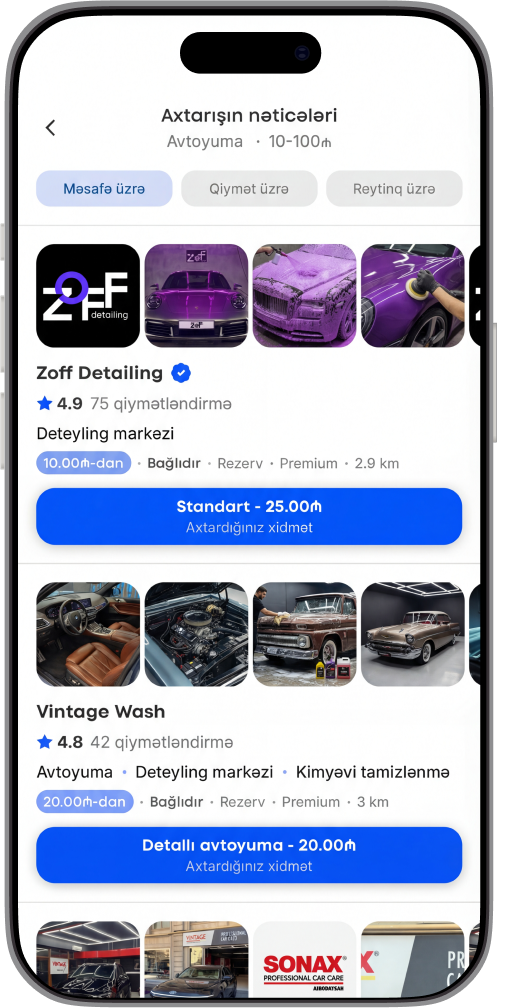
Whether drivers need a wash, detailing or an oil change, choosing where to go starts with several questions at once. Is the service offered nearby? What does it cost? Can the business take the car at the right time? The catalogue lets drivers start by service, location and time. Public web pages make browsing possible before sign-in.
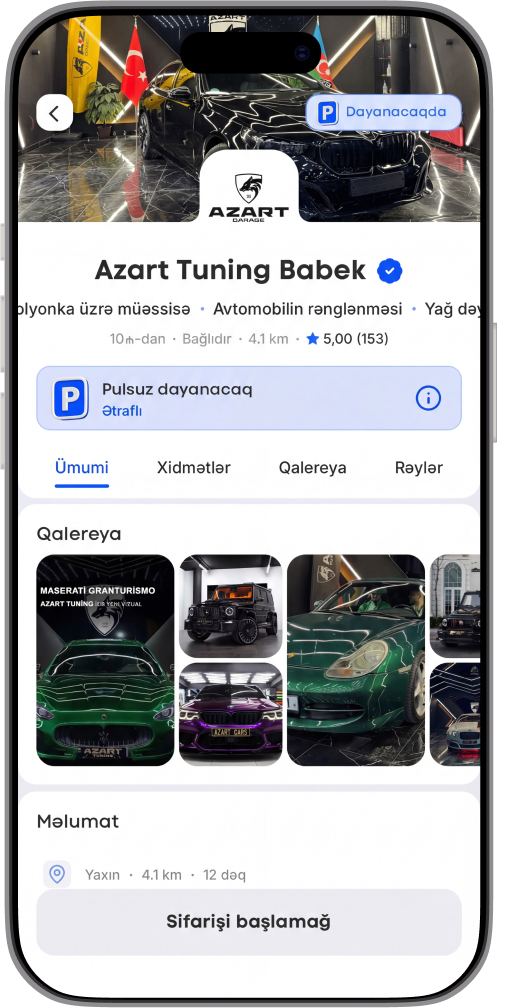
The catalogue and partner profiles draw from the same business records. That makes the partner profile the place to check service prices, hours, location and reviews before moving to checkout.
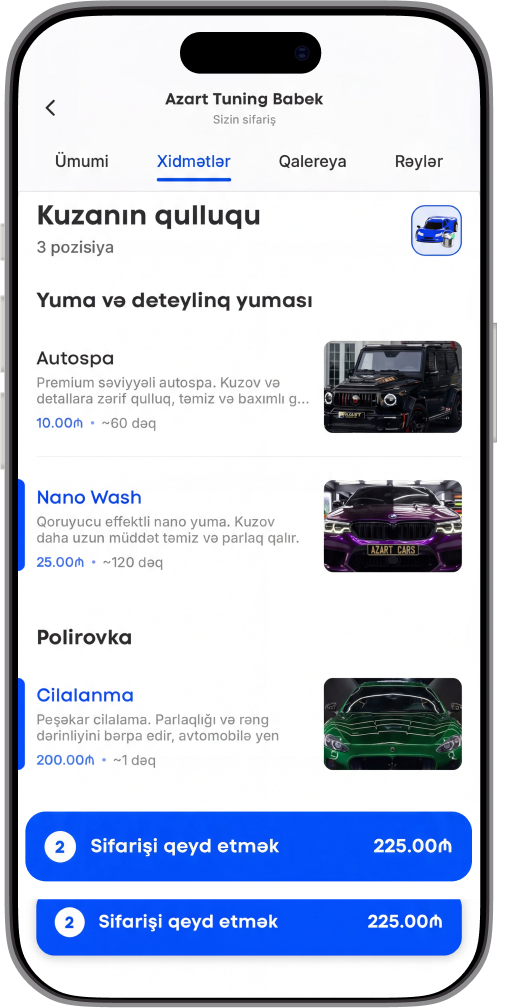
On the website, a catalogue card opens the partner profile in place. Drivers can inspect a business and return to the catalogue without starting their search again. Service groups in the profile give the list a consistent structure, while individual rows still show the price and available details.
The archive screen is from the customer app. The catalogue and profile behavior described here comes from the booking website, where those same decisions have to work with a link that can be opened directly.
Carry the choice through sign-in
After a driver selects a service, the profile and checkout share one draft for that business. If the driver opens checkout, closes it and returns, the existing choices stay in place.
A new customer verifies their phone number before sending a request. The site returns them to the same partner and selection after sign-in. This keeps authentication from asking them to repeat the decisions they just made.
The web profile and checkout are separate steps, but they share the booking selection. The checkout can open over the profile, and closing it brings the driver back to the business they were looking at. The selected services are reflected in the order summary, so the price remains tied to the choices the driver made.
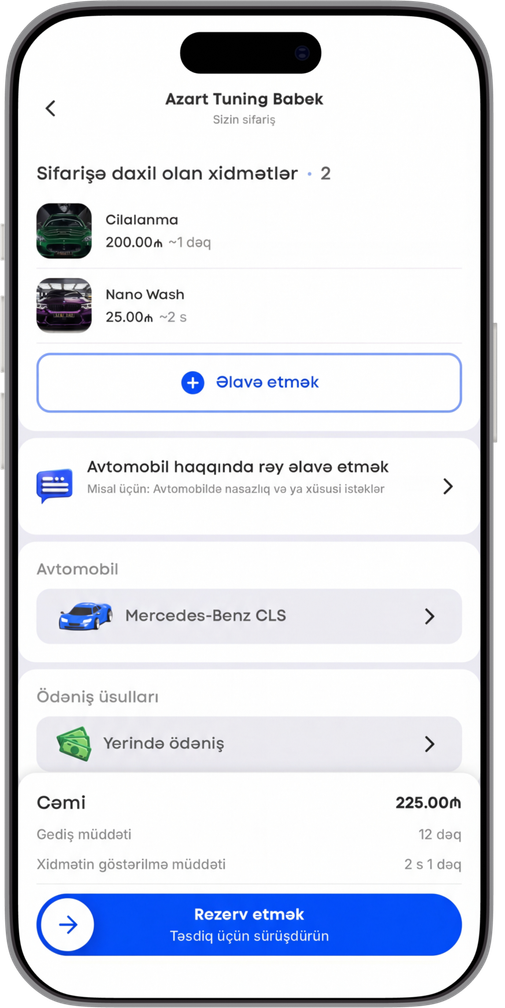
The archived mobile checkout shows another part of the same design problem: selected services, vehicle and payment method need to be visible together before the driver sends the request.
Connect the request to partner operations
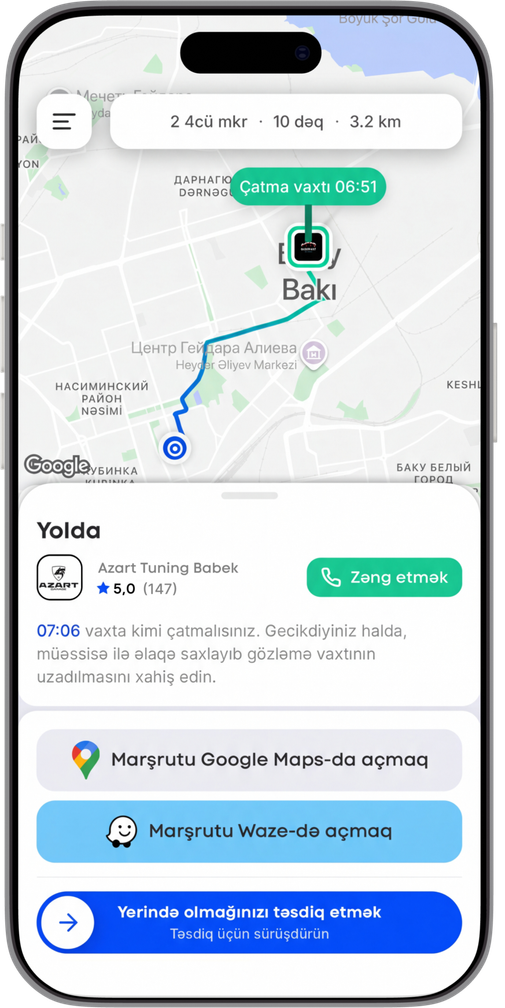
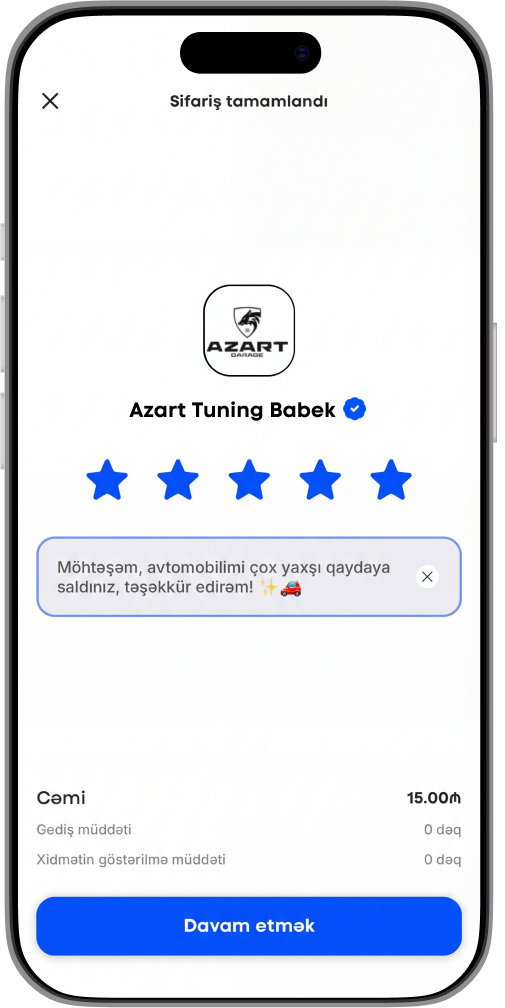
Drivers use the customer app to submit a request and track the response. Businesses use the partner app to manage incoming requests. The product also includes a CRM and web booking experience, so the service extends from discovery to the work of handling a visit.
The customer and partner apps have different jobs. The customer app has to explain what will be requested before the driver commits. The partner app has to make the request usable for the business that receives it. Designing these together means treating the confirmation as a handoff between two people with different information needs.
The website, both apps and the CRM are the four surfaces covered by the product design. The archived screens here show the customer experience, while the partner app links above lead to the business-facing product.
See the archived Yumo Client and Yumo Partner presentations in Figma. Access may be required.
My contribution and the team’s work
I founded Yumo and serve as CEO. As Product Manager and Product Owner, I led the roadmap, set priorities and shaped the service rules behind the interface, including availability, booking, commissions and cashback. I also worked on partner acquisition.
As Lead UI/UX Designer, I designed the customer and partner apps, CRM and design system. I designed and built Yumo’s booking website, adapting the native booking patterns to browser navigation and keeping the service selection, summary and sign-in connected.
I built reusable UI and the visual identity alongside the core product work, including landing pages and campaign banners. I worked with the team through delivery, testing and iteration.
Read the leadership note